The Best of Paganini
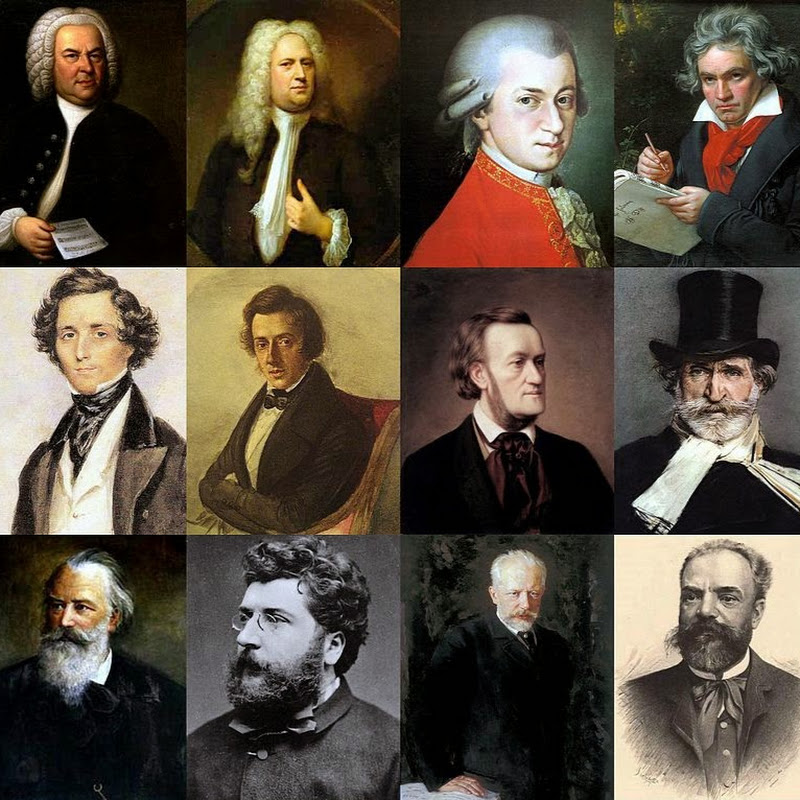
The Best of Niccolò Paganini (27 October 1782 – 27 May 1840)
Paganini was the most celebrated violin virtuoso of his time, and left his mark as one of the pillars of modern violin technique. His Caprice No. 24 in A minor, Op. 1, is among the best known of his compositions, and has served as an inspiration for many prominent composers.
He was born in Genoa, then capital of the Republic of Genoa, the third of the six children of Antonio and Teresa (née Bocciardo) Paganini. Paganini's father was an unsuccessful trader, but he managed to supplement his income through playing music on the mandolin. At the age of five, Paganini started learning the mandolin from his father, and moved to the violin by the age of seven. His musical talents were quickly recognized, earning him numerous scholarships for violin lessons. The young Paganini studied under various local violinists, including Giovanni Servetto and Giacomo Costa, but his progress quickly outpaced their abilities. Paganini and his father then traveled to Parma to seek further guidance from Alessandro Rolla. But upon listening to Paganini's playing, Rolla immediately referred him to his own teacher, Ferdinando Paer and, later, Paer's own teacher, Gasparo Ghiretti. Though Paganini did not stay long with Paer or Ghiretti, the two had considerable influence on his composition style.
Paganini composed his own works to play exclusively in his concerts, all of which profoundly influenced the evolution of violin technique. His 24 Caprices were likely composed in the period between 1805 and 1809, while he was in the service of the Baciocchi court. Also during this period, he composed the majority of the solo pieces, duo-sonatas, trios and quartets for the guitar, either as a solo instrument or with strings. These chamber works may have been inspired by the publication, in Lucca, of the guitar quintets of Boccherini. Many of his variations, including Le Streghe, The Carnival of Venice, and Nel cor più non mi sento, were composed, or at least first performed, before his European concert tour.
Generally speaking, Paganini's compositions were technically imaginative, and the timbre of the instrument was greatly expanded as a result of these works. Sounds of different musical instruments and animals were often imitated. One such composition was titled Il Fandango Spanolo (The Spanish Dance), which featured a series of humorous imitations of farm animals. Even more outrageous was a solo piece Duetto Amoroso, in which the sighs and groans of lovers were intimately depicted on the violin. There survives a manuscript of the Duetto, which has been recorded. The existence of the Fandango is known only through concert posters.
However, his works were criticized for lacking characteristics of true polyphonism, as pointed out by Eugène Ysaÿe. Yehudi Menuhin, on the other hand, suggested that this might have been the result of his reliance on the guitar (in lieu of the piano) as an aid in composition. The orchestral parts for his concertos were often polite, unadventurous, and clearly supportive of the soloist. In this, his style is consistent with that of other Italian composers such as Paisiello, Rossini and Donizetti, who were influenced by the guitar-song milieu of Naples during this period.
On 27 May 1840, Paganini died from internal hemorrhaging before a priest could be summoned. Because of this, and his widely rumored association with the devil, the Church denied his body a Catholic burial in Genoa.
0:00 Violin Concerto No.2 in B minor ('La campanella'), Op. 7, MS 48- Rondo
8:27 Sonata for violin & guitar in D major (Centone di sonate, Letter A-2), MS 112-2- Adagio
12:23 Sonata for violin & guitar in D major (Centone di sonate, Letter A-2), MS 112-2- Rondoncino
16:35 Grand Sonata, for guitar & violin in A major, Op. 35, MS 3- Romanza
20:45 Grand Sonata, for guitar & violin in A major, Op. 35, MS 3- Andantino variato
29:52 Caprice for violin solo in E major (Andante), Op. 1-1- No. 1 in E major
31:46 Caprice for violin solo in A minor (Agitato), Op. 1-5- No. 5 in A minor
34:18 Caprice for violin solo in E major 'The Hunt' Op. 1-9- No. 9 in E major
37:12 Violin Concerto No.2 in B minor ('La campanella'), Op. 7, MS 48- Adagio
44:28 Sonata concertata, for guitar & violin in A major, Op. 61, MS 2- Adagio assai espressivo
48:01 Sonata concertata, for guitar & violin in A major, Op. 61, MS 2- Rondeau- Allegretto con brio scherzando
50:07 Caprice for violin solo in B flat major 'The Devil's Chuckle,' Op. 1-13- No. 13 in B flat major
52:32 Caprice for violin solo in D major (Allegretto), Op. 1-20- No. 20 in D major
56:05 Caprice for violin solo in A minor (Theme & Variations), Op. 1-24- No. 24 in A minor
1:01:02 Cantabile, for violin & piano (or guitar) in D major, (MS 109)
1:05:30 Violin Concerto No.1 in E flat major (usually transposed to D major), Op. 6, MS 21- Rondo- Allegro spirituoso
📊 Video Statistics
🎧 About This Track
This 1 hour and 15 minutes audio journey has been thoughtfully composed to provide a rich musical experience centered around piano, guitar, with each note chosen to promote calm and well-being. Every element has been balanced to ensure a consistent experience throughout, without jarring transitions or sudden changes that might disrupt your relaxation. The audio quality maintains professional standards, making it suitable for high-quality speakers, headphones, or sleep systems.
This audio experience features a carefully balanced sound profile with slow tempo and gentle intensity. The mix has been optimized for extended listening, with frequency ranges that promote relaxation without fatigue. Whether listening through speakers or headphones, the spatial qualities of the recording create an immersive environment that transports you away from daily concerns.
Listening to this audio can provide numerous benefits for both mental and physical well-being. The carefully designed soundscape promotes parasympathetic nervous system activation, helping the body shift from 'fight or flight' mode into 'rest and digest' mode. Regular listening can help establish healthy relaxation habits and improve overall stress management.
The science of sound therapy draws from multiple disciplines: psychology, neuroscience, and acoustic ecology. Research consistently shows that ambient sounds can modulate autonomic nervous system activity, shifting the body from stress response (sympathetic activation) toward relaxation response (parasympathetic activation). This occurs through multiple pathways: masking of disruptive environmental sounds, providing gentle cognitive engagement that prevents anxious rumination, and creating predictable soundscapes that signal safety to primitive brain regions. Regular exposure to relaxing audio can help establish positive feedback loops where the brain learns to associate certain sounds with calm states.
The community response to this audio has been genuinely appreciative, with 123,319 likes reflecting the genuine impact it has had on listeners worldwide. In the comments section, listeners share personal stories of how this audio has helped them through difficult times, aided their sleep, or provided a reliable source of calm during stressful periods. Common emotional responses include feeling calm, demonstrating the profound effect well-crafted audio can have on our mental state. Many listeners return to this track regularly, considering it an essential part of their self-care routine. The consistent quality and reliable results have built a dedicated community of listeners who trust this audio for their relaxation needs.
To get the most from this audio experience, consider your listening environment and equipment. Find a comfortable position and allow yourself to fully receive the audio experience. Quality headphones can enhance the spatial qualities of the recording, though speakers work well for creating ambient environments. Adjust volume to your preference—lower for background ambience, slightly higher for active listening. Consistency in your listening routine can amplify benefits over time, as your mind learns to associate these sounds with relaxation.
This audio is particularly effective during: After a stressful day when you need to decompress; During quiet evening hours for peaceful ambience; Weekend relaxation and self-care time; Any moment when you need to step away from daily pressures. The versatility of this track means it adapts well to various situations and times of day. Listen when you feel the need for calm, or make it part of your regular routine for cumulative benefits.
Published by Classical Music11, this audio has been mastered for optimal streaming quality across all devices. At 1:15:21, this track works excellently with the built-in loop feature for extended listening sessions. The consistent audio levels throughout ensure no sudden volume changes that might disrupt your experience.
✨ Highlights
- ⭐ Reached 1 million+ views milestone
- 🎵 Professional musical composition
🎯 Best For
💡 Listening Tips
- 🔁 Use the loop feature for extended sessions
- ⏰ Set a sleep timer to conserve battery
- 🎛️ Try the Ambient Sound Mixer to customize your experience
- 📱 Works great through phone speakers or Bluetooth
💬 What Listeners Say
"His face is basically saying 'so you thought you could play the violin'"
— @justicewasserved17 👍 5,161
"Practice so hard, people think you sold your soul"
— @joshuafelicilda5733 👍 4,050
"Violin levels: 1.easy 2.medium 3.hard 4.Paganini"
— @pupu2410 👍 6,095
📖 How to Get the Most Out of This Audio
To fully enjoy "The Best of Paganini", we recommend the following approach:
- Set the Scene: Find a comfortable position, dim the lights if possible, and minimize distractions.
- Use Quality Audio: Headphones or quality speakers will enhance the experience significantly.
- Adjust Volume: Keep the volume at a comfortable background level - loud enough to hear, quiet enough to relax.
- Enable Loop: Click the Loop button above for continuous play during your session.
- Try the Mixer: Use our Ambient Sound Mixer below to customize the audio with additional sound layers.
This 1:15:21 track is ideal for overnight sleep sessions. With 9.7M views, it has become a trusted choice for thousands of listeners worldwide.